OVERVIEW
The horse presented with
- Moderate Grade 3 right front lameness that blocked to the foot.
- Radiographic evidence of coffin joint osteoarthritis (OA).
- Prior surgical fusion of the left hind DIT and TMT joints in an earlier procedure.
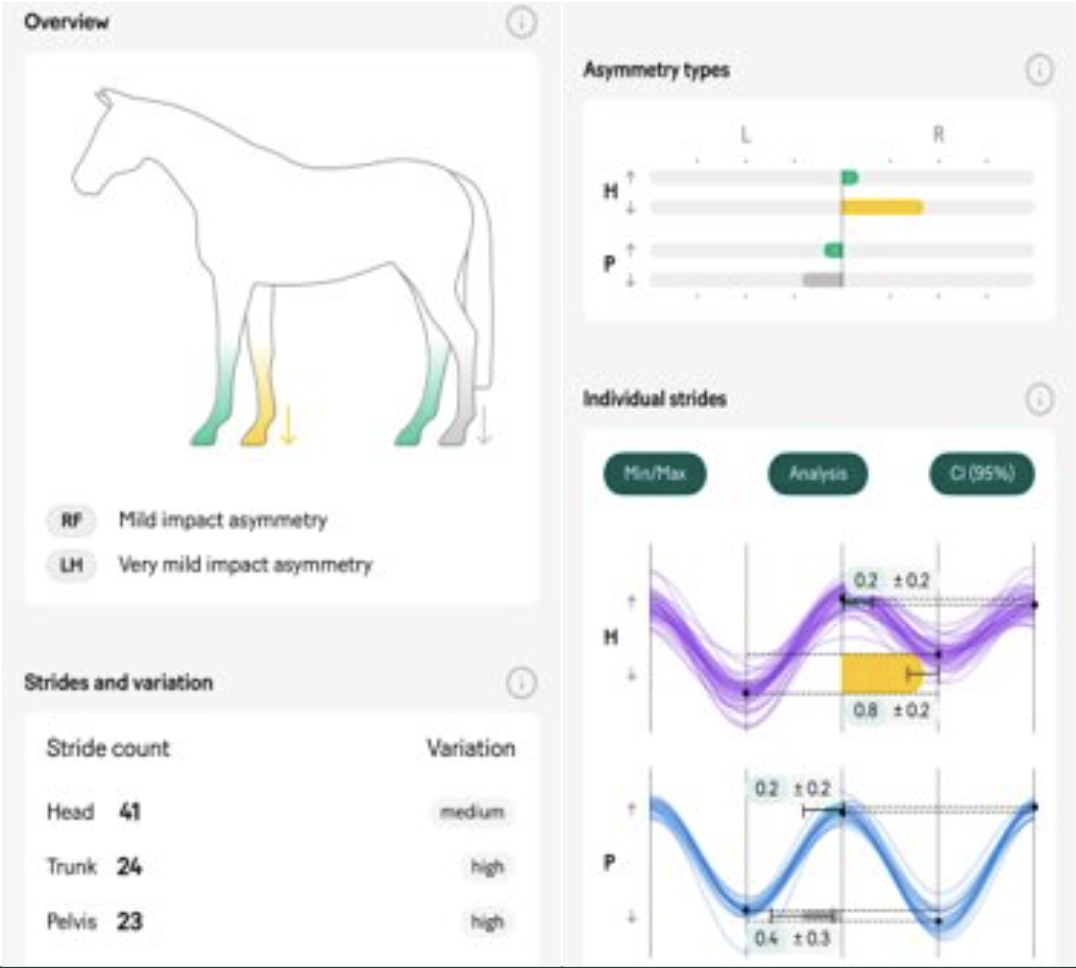
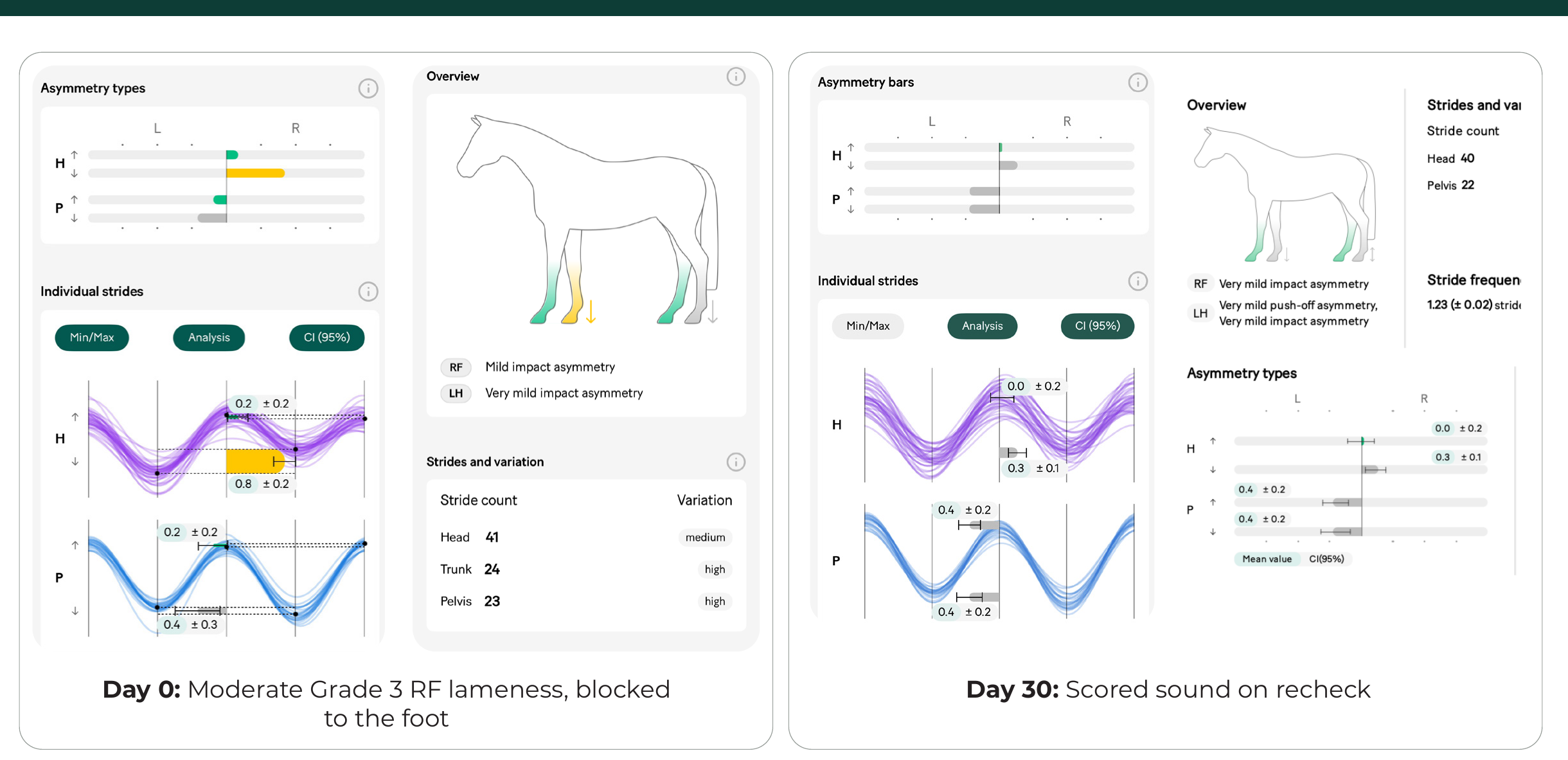
Gait analysis at presentation showed mild impact asymmetry in the right front and very mild impact asymmetry in the left hind.
TREATMENT APPROACH
The plan, in order
- equicenta® CTM injection at the tear site.
- Ongoing monitoring and progressive load.
Day 0 · Moderate Grade 3 RF, blocked to foot
OUTCOME
Day 30 — Early Response
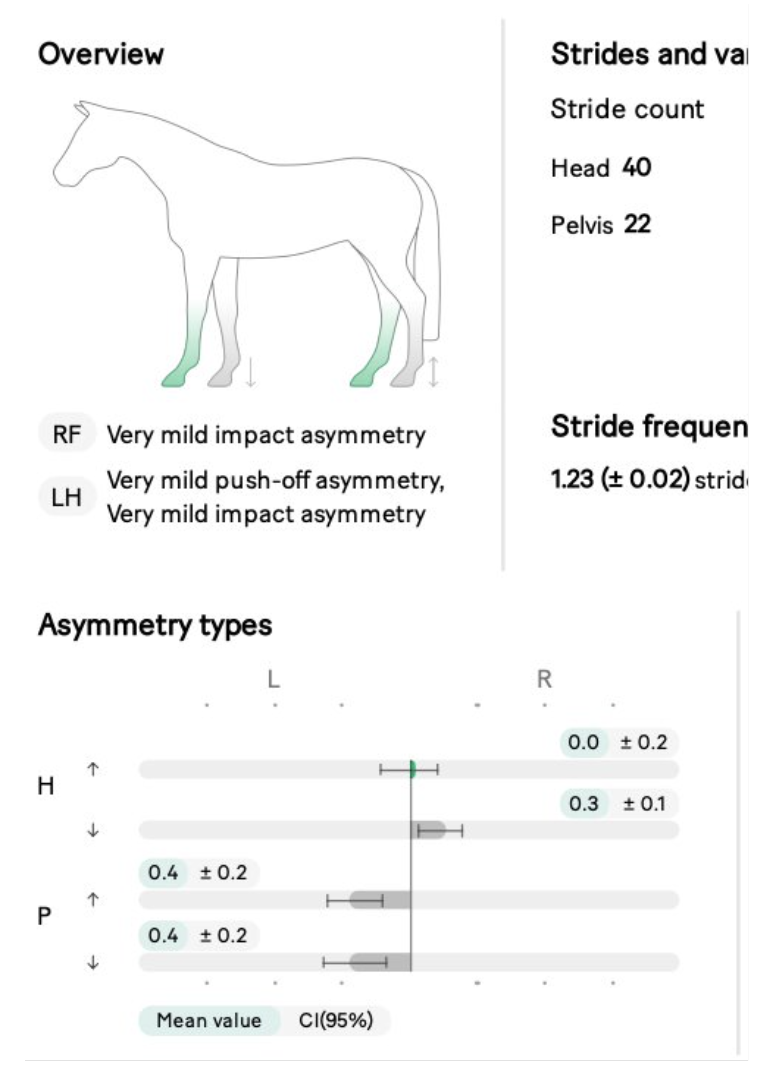
At the 4-week recheck, the horse scored sound. Gait analysis showed very mild impact asymmetry in the right front and very mild push-off and impact asymmetry in the left hind — both within a low, stable range. The LH surgically fused DIT/TMT remained unchanged from baseline.
Day 30 · Scored sound on recheck
Full Day 0 vs. Day 30 gait comparison
At re-evaluation:
- The horse was clinically sound.
- Significant improvement was observed in gait symmetry and load distribution.
- No adverse reactions were reported.
This rapid improvement suggests a strong response to treatment, particularly in a case where chronic degeneration and compensatory mechanics were both present.
WHY THIS CASE MATTERS
Several considerations in equine medicine
1. Compensation creates secondary injury
Previous surgical fusion altered biomechanics, increasing stress on the RF limb. Treating the “new” injury requires understanding the full orthopedic history.
2. OA is not just degenerative — it’s active
Coffin joint OA involves ongoing inflammation and cellular breakdown, not just wear and tear. Addressing inflammation alone may not be enough.
3. Biologic therapies fill the gap
In cases like this, biologics can:
- Support cellular repair signaling.
- Reduce inflammatory cascades.
CLINICAL TAKEAWAY
Joints respond on the average 4 weeks after injection of equicenta® CTM.1
For horses presenting with
- Chronic lameness
- Joint degeneration
- History of orthopedic intervention
A multi-layered treatment approach is critical. This case demonstrates that even in complex, high-load scenarios, it is possible to:
- Restore soundness
- Improve performance potential
- Support long-term joint health
FINAL THOUGHT
Horse First. Sport Second.
At Equine Performance Labs, cases like this reinforce our core belief: meaningful recovery isn’t just about returning to work — it’s about restoring comfort, function, and longevity in every stride.
Considering equicenta® CTM for a specific patient?
Contact us today to discuss whether our proven biologic solution is right for your case. Every horse and every injury presents its own challenges. The goal is always to support the tissue environment in a way that prioritizes comfort, function, and long-term well-being.
Get More Info