
OVERVIEW
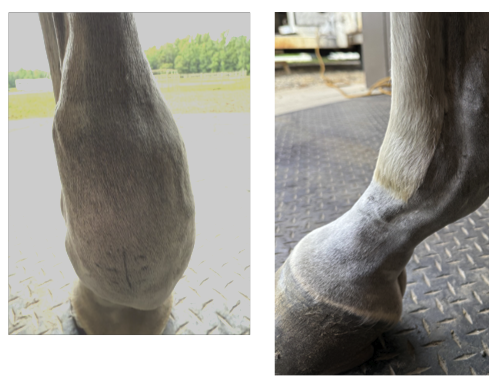
The horse presented with
- Grade 4 LF lameness, a DDF tendon tear.
- Ultrasound showing fibrosis alongside the new tear, indicating both chronic and acute injury in the same limb.
Day 0 · Grade 4 LF lameness, visible swelling at suspensory branch
TREATMENT APPROACH
The plan, in order
- equicenta® CTM injection at the tear site
- Corrective shoeing to reduce tendon strain
- Stall rest followed by controlled rehabilitation
- Ongoing monitoring and progressive load
OUTCOME AT 30 DAYS
Day 30 — Early Response
Day 30 · Reduced swelling, early improvement in symmetry
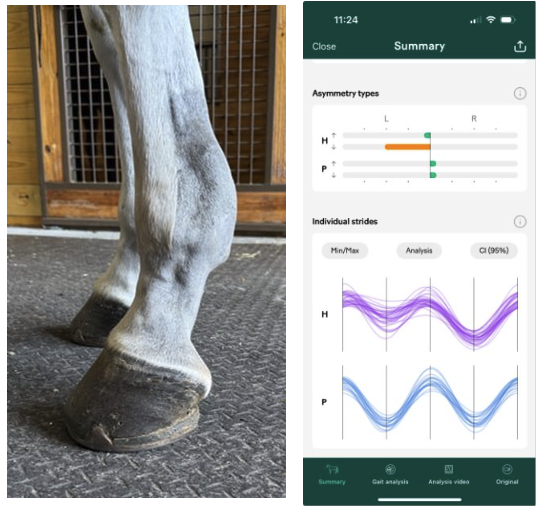
At early re-evaluation, gait analysis indicated an early positive response to treatment. Symmetry and movement patterns showed measurable improvement. The horse remained within a controlled rehabilitation phase.
OUTCOME AT 90 DAYS
Day 90 — Cleared for Work
Full Day 30 vs. Day 90 gait comparison
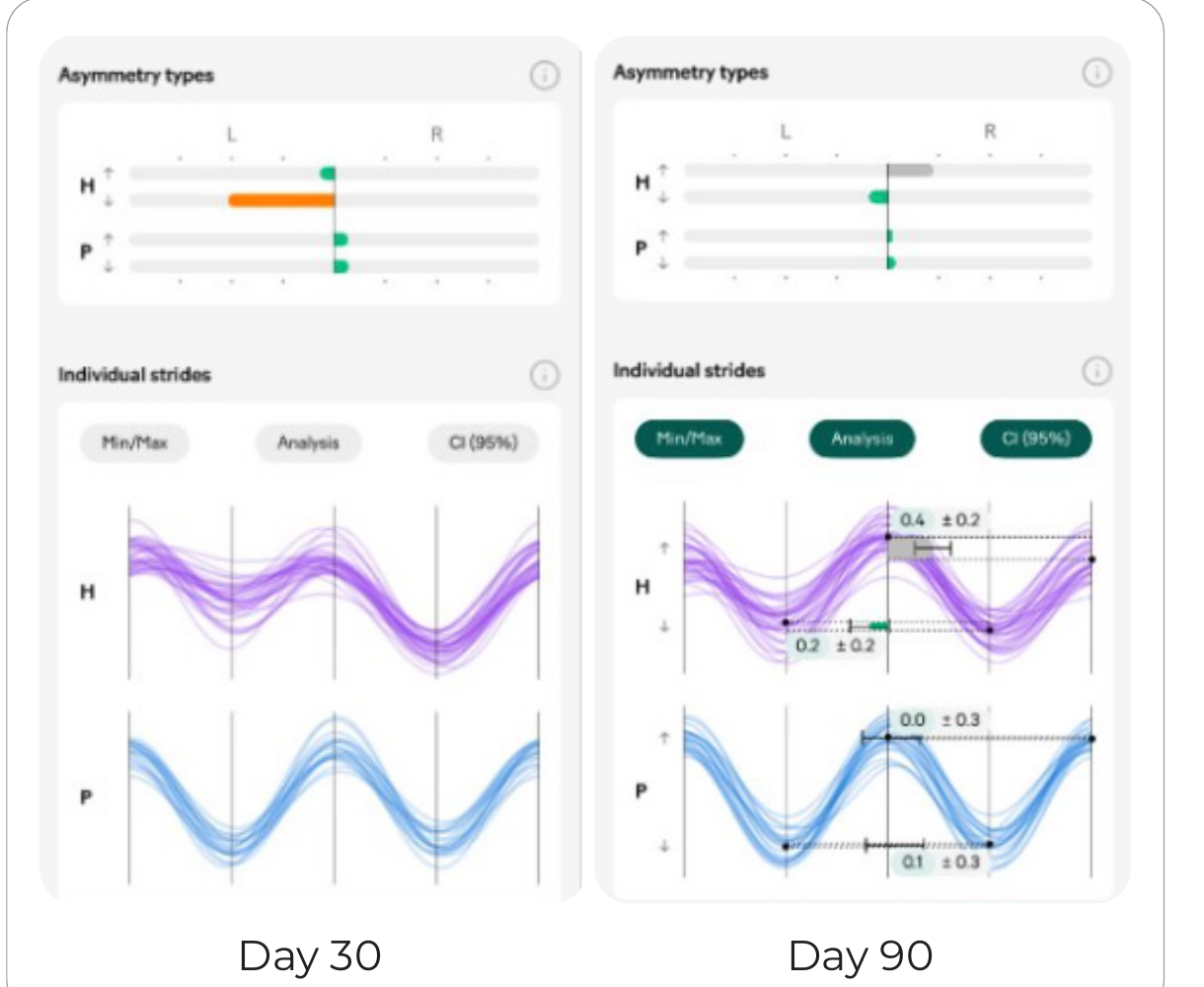
At follow-up, the horse was cleared for return to under-saddle work. Symmetry was restored and limb function had improved significantly. The horse progressed back toward performance and was preparing for transition to Wellington.
WHY THIS CASE MATTERS
Several considerations in equine musculoskeletal tissue injury
1. Chronic and acute injury often coexist
Ultrasound showing fibrosis alongside a new tear demonstrates how past tissue changes and new injury often present in the same limb, requiring a layered approach to care.
2. Structured rehabilitation is critical
Recovery was not driven by intervention alone, but by the combination of:
- Mechanical support
- Controlled loading
- Progressive rehabilitation
3. Biologic support enhances the environment for recovery
In cases like this, biologic therapies can:
- Support local tissue structure
- Modulate inflammatory response
- Contribute to a more favorable healing environment
CLINICAL TAKEAWAY
Complex musculoskeletal tissue injury rarely responds to single-modality intervention. This case demonstrates the value of biologic support within a structured, multimodal recovery plan.1
For horses presenting with
- Severe lameness
- Tendon injury with concurrent chronic fibrosis
- Evidence of both chronic and acute tissue damage
A comprehensive, multimodal approach is essential. This case demonstrates that even in complex musculoskeletal tissue injuries, it is possible to:
- Improve movement symmetry
- Progress safely through rehabilitation
- Return to performance activity
FINAL THOUGHT
Horse First. Sport Second.
At Equine Performance Labs, cases like this reinforce our core belief: because meaningful recovery isn’t just about returning to work — it’s about restoring stability, function, and confidence in every step forward.
Have a case in mind?
Considering equicenta® CTM for a specific patient? Contact us today to discuss whether our proven biologic solution is right for your case.
Get More Info