
What This Treatment Is
equicenta® CTM is a veterinarian-administered injectable designed to support joints, tendons, and ligaments using naturally derived equine tissue components.
For Horse Owners
Vet administered, equicenta® CTM is derived from equine umbilical cord tissue and engineered to support joints, tendons, and ligaments with nature’s own design — from horses for horses.
Our peer-reviewed trial in Frontiers in Veterinary Science is live, the largest controlled trial of its kind in equine regenerative medicine.
Read the Study →For Which Horses
equicenta® CTM is designed to support equine joints, tendons, and ligaments — the tissues that take the heaviest load in any career, from foal to senior, sport horse to companion. Whether it’s appropriate for your horse depends on the diagnosis, the lesion, and the plan your veterinarian builds with you.
It is intended as part of a broader, structured plan — not a stand-alone fix.
See the Clinical Detail
Three of the most frequent settings where your veterinarian may consider equicenta® CTM as part of a treatment plan.
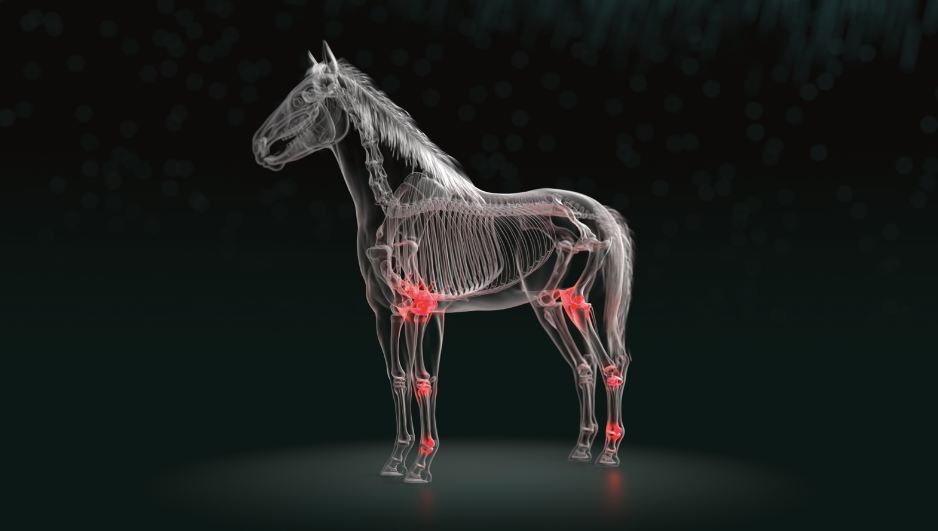
For chronic joint inflammation and discomfort, equicenta® CTM provides a connective tissue scaffold that may complement your veterinarian’s wider plan.
See How It Works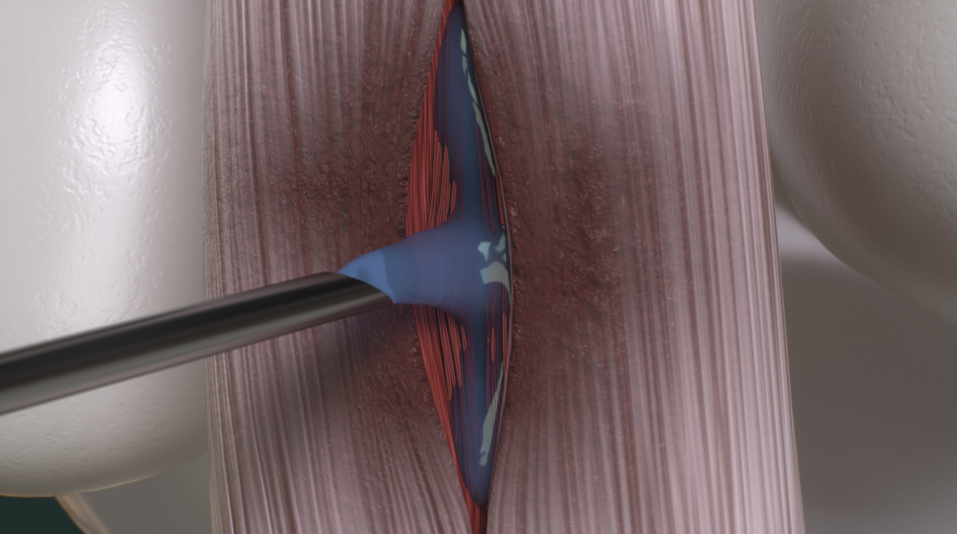
Musculoskeletal tissue lesions take time and structure to heal. equicenta® CTM is designed to support the local environment alongside controlled rehabilitation.
See How It Works
After surgery, the focus is on stability and long-term function. equicenta® CTM may be used as part of a structured post-operative care plan.
See How It WorksWhat’s Inside
equicenta® CTM is built from naturally-occurring proteins found in equine umbilical cord tissue. Each one plays a specific role — and each one has a story. Tap any name below for the plain-language version.
View All TwelveYour horse’s built-in structural support beams. Collagens form the backbone of bone, tendon, ligament, and cartilage — they’re what holds everything in working order under load.
Read the full story →The cushion layer that organizes the matrix and holds water. They’re what gives joints and tendons their bounce, stride after stride.
Read the full story →Why a healthy joint feels springy, not stiff. GAGs keep the joint hydrated and lubricated — the perfect saddle pad that never packs down.
Read the full story →The protein that tells the demolition crew to put down the sledgehammers. A2M binds enzymes that break down cartilage and tendon, and reins in chronic damage.
Read the full story →Inflammation that doesn’t resolve is what turns a one-time injury into a chronic problem. Annexin is part of how the body shuts inflammation off on time.
Read the full story →Tangled collagen fibers heal as scar. Aligned collagen fibers heal as functional tissue. Decorin is what does the lining-up — a small protein with an outsized job.
Read the full story →Repair cells with no direction re-injure. Transgelin signals to fibroblasts and stem cells, helping them rebuild smarter, not just harder.
Read the full story →Stalls don’t fail because the wood breaks — they fail because the hinges pull out. Vinculin is the heavy-duty hardware holding cells to the matrix around them.
Read the full story →The proteins that show up after the storm and rebuild it right — straight fences, level footing, gates back where they belong. Organized rebuild, not scar.
Read the full story →An active injury site is a hostile place for cells. Clusterin shields them so they can keep doing repair work through the worst of it.
Read the full story →Most chronic joint problems aren’t a healing problem — they’re a stopping problem. IL-1ra and IL-10 are the body’s most important brakes on inflammation.
Read the full story →Tissue can’t heal without supply. VEGF is the signal that tells the body to build the roads — new blood vessels — to deliver everything healing tissue needs.
Read the full story →“After trying steroids and other treatments for Eli’s arthritis, equicenta® CTM made the biggest difference in his comfort and movement.Karen M. Read More
“Before the ribbons, before the results — Vivi’s journey through injury, recovery, and return to work.Vivi’s Story Read More
“The plan our vet put together — including equicenta® CTM and structured rehab — gave us a real path back to work.Jamie L. Read More
For Horse Owners
A clear, honest overview — what equicenta® CTM is, what to expect, and the questions worth bringing to your vet.
equicenta® CTM is a veterinarian-administered injectable designed to support joints, tendons, and ligaments using naturally derived equine tissue components.
It may be appropriate if your horse has:
Always determined by your veterinarian.
Proven safety in a controlled study. No adverse events reported. In real cases, it has supported comfort, reduced lameness, and improved movement — without steroids and without surgery.
Bring these to your next appointment — they’ll help you and your veterinarian make the best decision together.
Have questions before your next vet visit? We’re happy to share educational resources or point you toward the answers your veterinarian is best placed to give.
Contact Us

Now Published
A peer-reviewed, multi-center trial found a single injection of equicenta® CTM delivered 2.72:1 odds of returning to prior performance and a superior safety profile versus standard of care.
For use by or on the order of a licensed veterinarian. Not for use in humans.
By submitting, you agree to receive occasional science and product updates from Equine Performance Labs. Unsubscribe anytime.