Published Clinical Trial · Bertone et al., Front. Vet. Sci. 2026
equicenta® CTM is a cryopreserved equine umbilical cord tissue allograft for joints, tendons, and ligaments, administered as a single, ready-to-use intra-articular, intralesional, or perilesional injection.
Evidence At A Glance
A first-in-class, cryopreserved equine umbilical cord tissue allograft for joints, tendons, and ligaments. In the first controlled trial of its kind in horses, a single ready-to-use injection outperformed standard-of-care biologics across pain, swelling, lameness, and return to performance. Injection reactions were reported after 3.4% of equicenta® CTM injections and 10.5% of standard-of-care injections.

Pragmatic, prospective, multicenter, open-label controlled trial versus clinician-selected standard of care. Source: Bertone AL, et al., Frontiers in Veterinary Science, 2026 · DOI 10.3389/fvets.2026.1833933
Built On Evidence
A controlled trial asks a harder question than a case series: how did this product compare with the biologics already in use, under the same follow-up rules?
Clinical usage · Frontiers 2026
Cryopreserved equine umbilical cord tissue allograft, supplied as a single, ready-to-use dose.
Intra-articular, intralesional, or perilesional injection.
A single dose per joint. For large joints such as the stifle, a single dose was given in each stifle pouch (medial, lateral, and femoropatellar).
224 injections in 138 horses: 148 equicenta® CTM injections (91 horses) and 76 standard-of-care injections (47 horses).
Clinician-selected, non-steroidal standard-of-care biologic (APS, PRP, ACS/IRAP, HA, and others) per veterinary judgment.
Pre-specified 26-week performance endpoint at 8 U.S. specialty equine practices. Follow-up was 100% at Week 12 and 98% at Week 26.
equicenta® CTM is investigational. These details describe how it was used in the published trial and are not instructions for use. Full methods: Bertone AL, et al. Front. Vet. Sci. 2026 (read the study).
The Result
One dose. Measured against the standard of care horses already receive.
26-Week Endpoint
At the pre-specified 26-week endpoint, eCTM cases had 2.72:1 odds of returning to or exceeding prior performance versus clinician-selected standard of care (p<0.006, Cohen's d=2.23).
The Pivotal Trial · Safety
A head-to-head observation versus clinician-selected standard of care in the same trial.
Beyond The Trial
Every data point above traces back to real horses. Here are a few of their stories.
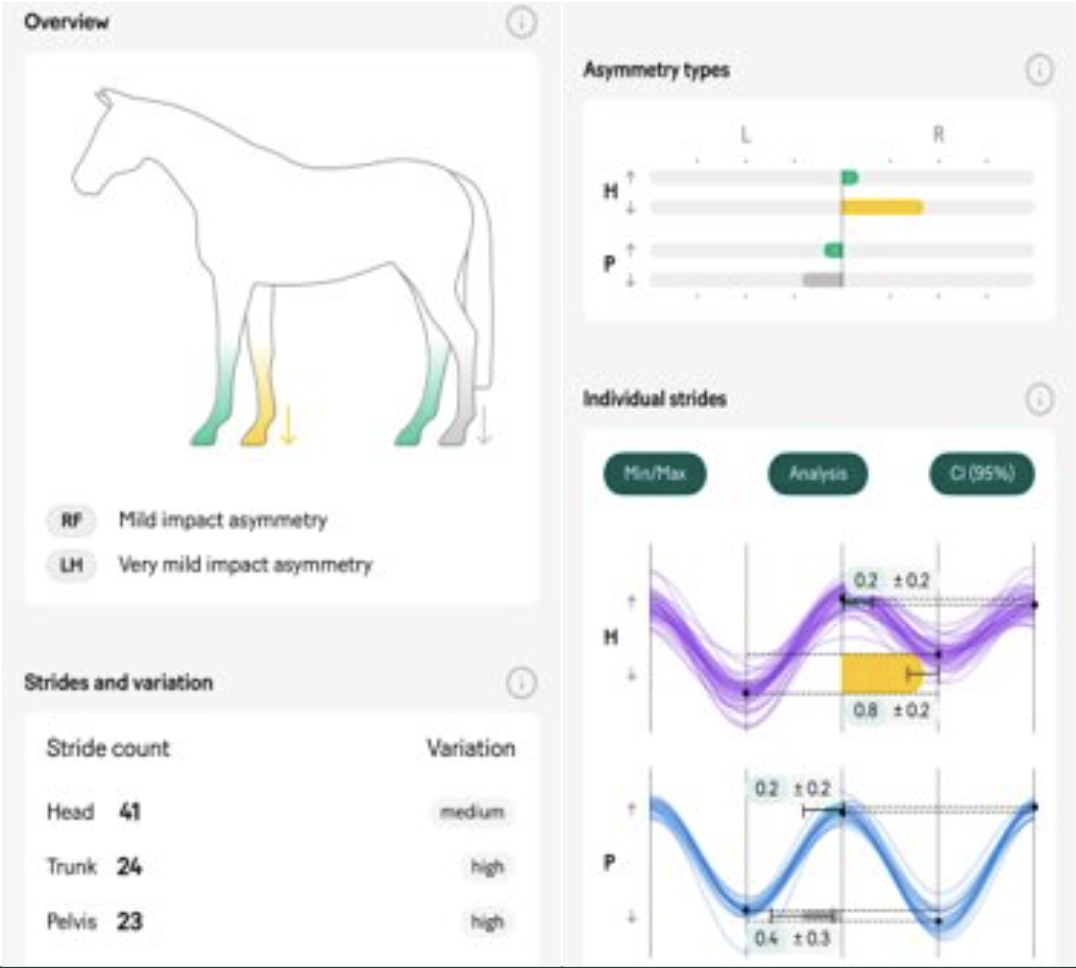
Day 0 Moderate Grade 3 RF, blocked to foot. Progression and management of a complex case.
Read the Case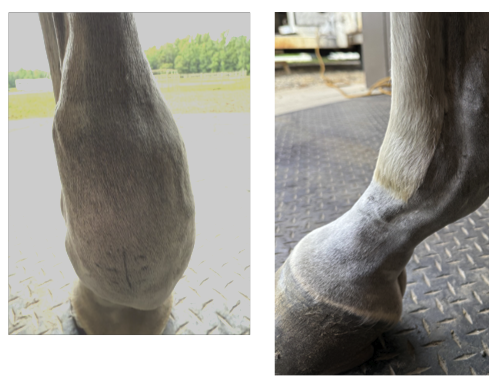
Progression and management of a severe LF lameness using a structured treatment plan.
Read the CaseIn Their Words
“The 100% veterinary follow-up for 26 weeks of 138 horses with 195 conditions of joints, tendons, or ligaments and 224 injections represents a meaningful advance and defining moment for clinical evidence based regenerative medicine.”
Alicia Bertone, DVM, PhDSenior Clinical Advisor, Equine Performance Labs · Lead Study Author
Now, It’s Published
One dose. A controlled trial. A clear performance result. This is the evidence behind equicenta® CTM.

Now Published
In a published, open-label controlled trial (Bertone et al., 2026), a single injection of equicenta® CTM was associated with 2.72:1 odds of returning to prior performance. Injection reactions were reported after 3.4% of equicenta® CTM injections and 10.5% of standard-of-care injections.
Study limitations: open-label design; heterogeneous, clinician-selected comparator; funded by Equine Performance Labs.
For use by or on the order of a licensed veterinarian. Not for use in humans.
By submitting, you agree to receive occasional science and product updates from Equine Performance Labs. Unsubscribe anytime.